

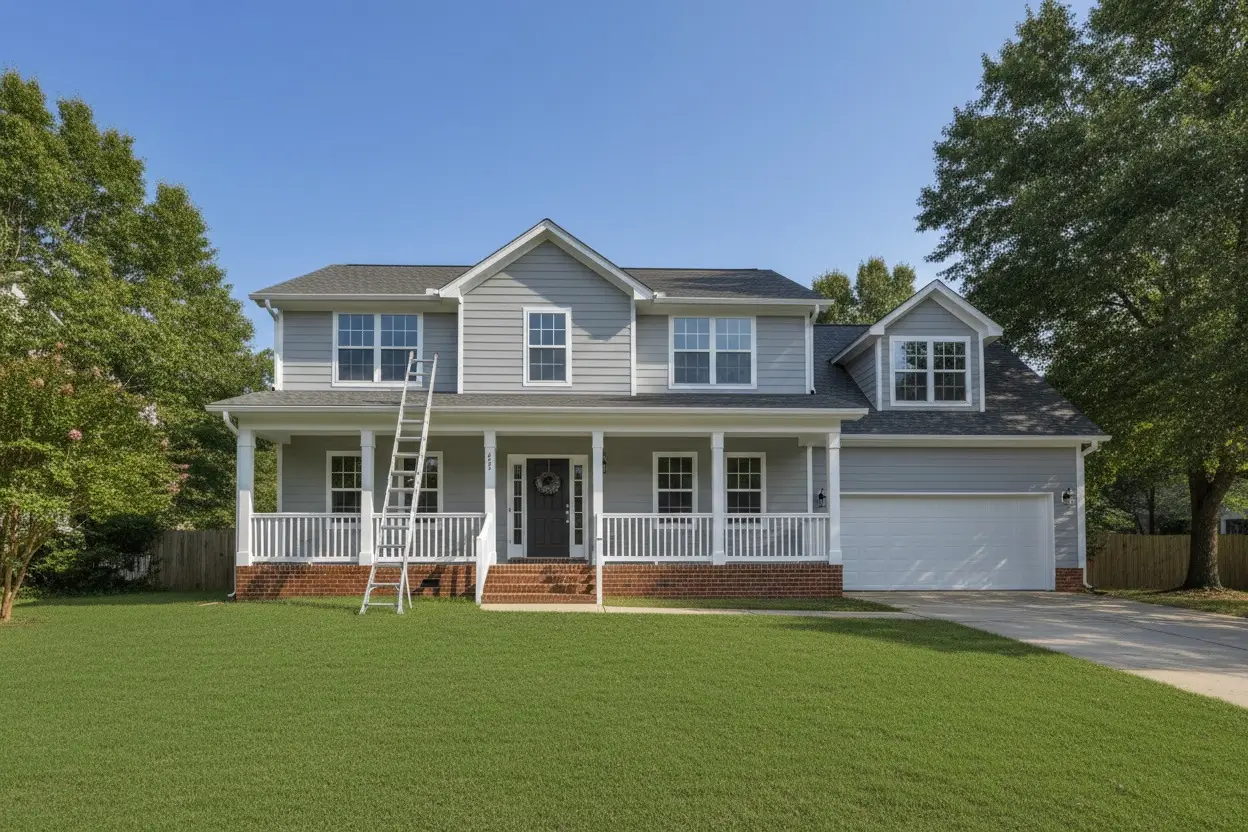
Siding Repair Gastonia, NC
Cracked panels, storm damage, or siding that has gone past patching. Call to be connected with a local siding contractor for siding repair in Gastonia and across Gaston County, NC, and find out whether you need a repair or a replacement.
- Serving Gastonia and Gaston County
- A local Gastonia phone number
- Help sorting out repair vs. replacement
- Stay on the line to be connected
What Actually Determines Repair vs. Replacement
Most homeowners don’t call because they’ve already decided what they need — they call because something looks wrong and they want to know how bad it is. That’s the right instinct. Siding damage almost always looks smaller on the outside than it is underneath, because the surface is the last thing that fails, not the first. Water finds its way in through failed flashing, gaps at seams, or panels that were never properly overlapped to begin with — by the time a crack or a loose panel is visible, moisture may have already been working its way into the wall behind it for months.

What Failed, Specifically?
A cracked panel from impact is a different problem than systemic warping from years of moisture exposure.

How Far Did It Spread?
Isolated damage in one section reads very differently than the same issue showing up in multiple areas of the home.

Is the Wall Behind It Still Sound?
This is the question that actually decides repair vs. replacement — not how the siding looks from the driveway.
Siding Repair Services in Gastonia and Gaston County
Siding repair services cover the situations where the damage is contained — a section, a few panels, a specific area — and the wall behind it hasn’t been compromised. Repair is often enough in these cases, provided the underlying wall is still in good shape. That holds whether the siding is vinyl, wood, or fiber cement. If you need a siding repair contractor in Gaston County, NC, call to find out whether your damage is a repair job. Not sure your town is covered? See which Gaston County towns calls are connected from.
Common siding repair situations
- Loose or warped panels — pulled away from the wall or visibly bowing, usually from moisture
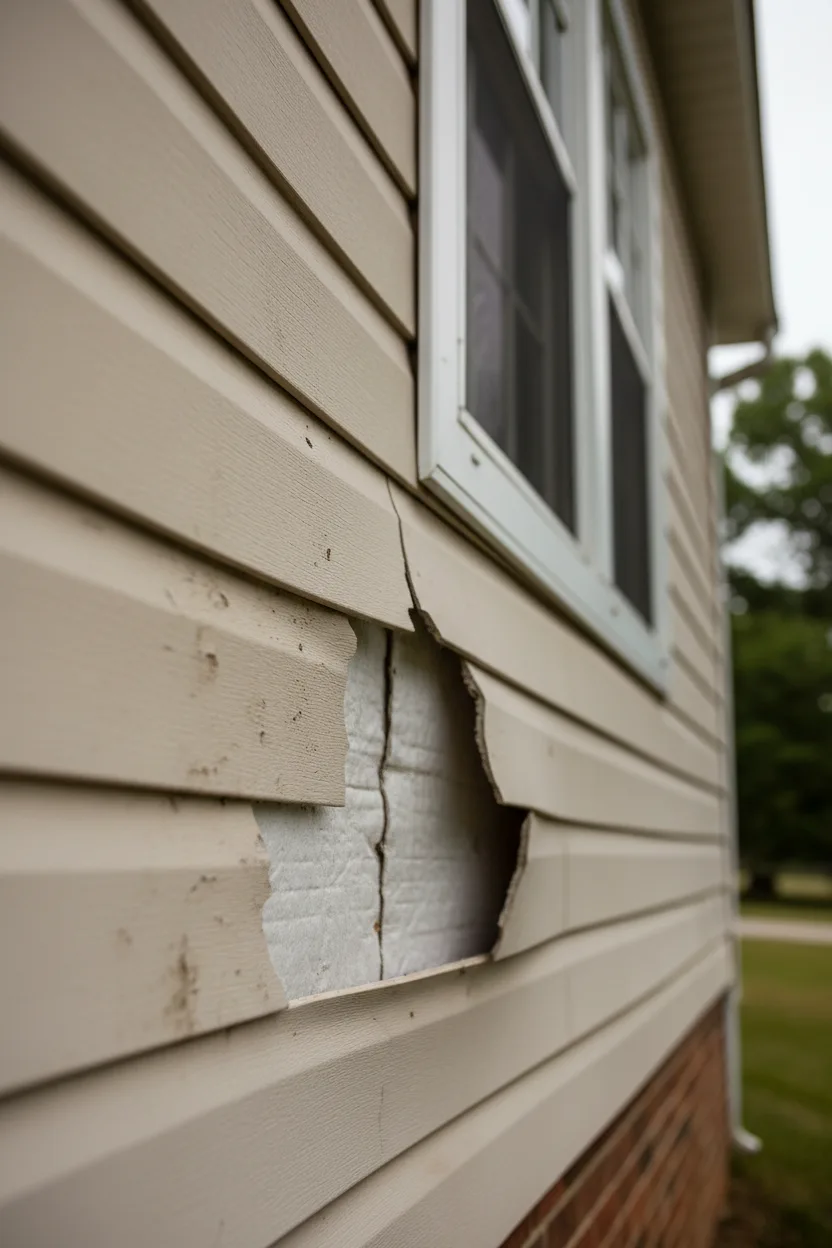
- Cracked or split panels — even a hairline crack can let water behind the panel over time
- Small impact damage — storm debris or age-related brittleness cracking individual panels
- Gaps and seam failures — common around windows, doors, and corners
- Faded or mismatched sections — a weathered patch that needs matching, not structural repair
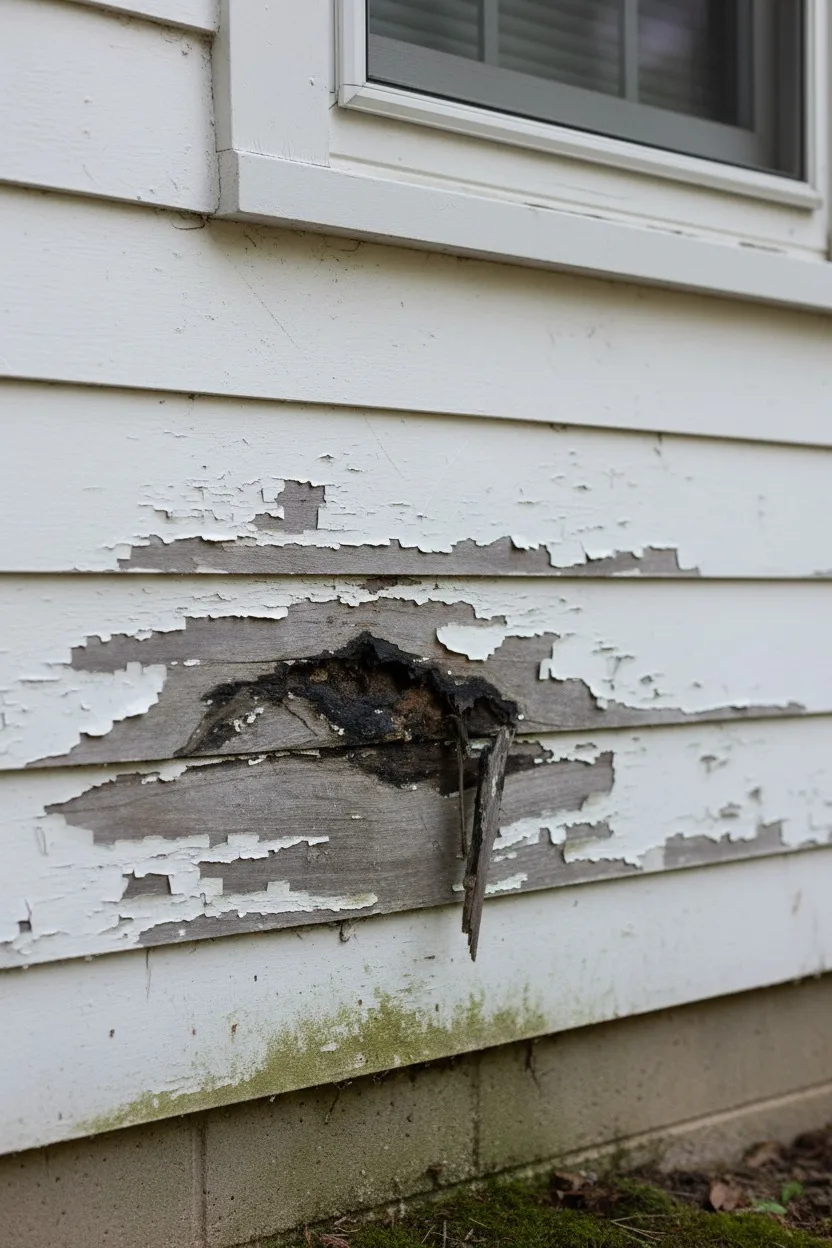
- Soft or rotted spots on wood siding — moisture damage that usually means replacing the affected boards, not painting over them
If your situation matches one of these, repair is likely sufficient — the goal is fixing the specific problem without disturbing the sections of your home that are still performing fine.
Siding Replacement Gastonia NC
Replacement becomes the right call when damage has moved past what a repair can reasonably address — either because it’s spread too far, or because the wall system behind the siding has already been compromised. Whether it’s a partial re-side or full siding installation services in Gastonia, the wall behind the old siding needs to be looked at first. If vinyl is on your list, this guide to vinyl siding installation in Gastonia explains what a good installation includes.
Signs that point toward replacement rather than repair
- Warping or buckling across multiple panels or sections, rather than one isolated area
- Repeated repairs in the same spots, a sign the underlying cause was never addressed
- Visible mold, soft spots, or interior water stains near exterior walls, usually meaning moisture has already reached the sheathing or framing
- Siding original to a home 20+ years old, showing broad wear rather than isolated issues
- Storm damage affecting a full side of the home, rather than a contained section
What replacement actually involves
A proper replacement isn’t just removing old panels and installing new ones. It means pulling the old siding, inspecting the wall underneath for rot or moisture damage, correcting flashing and moisture barriers where needed, and only then installing new siding — vinyl or otherwise — over a wall system that’s actually sound. Skipping that inspection step is the single most common reason siding fails again within a few years of being “replaced.”
Fiber Cement Siding Installation in Gastonia, NC
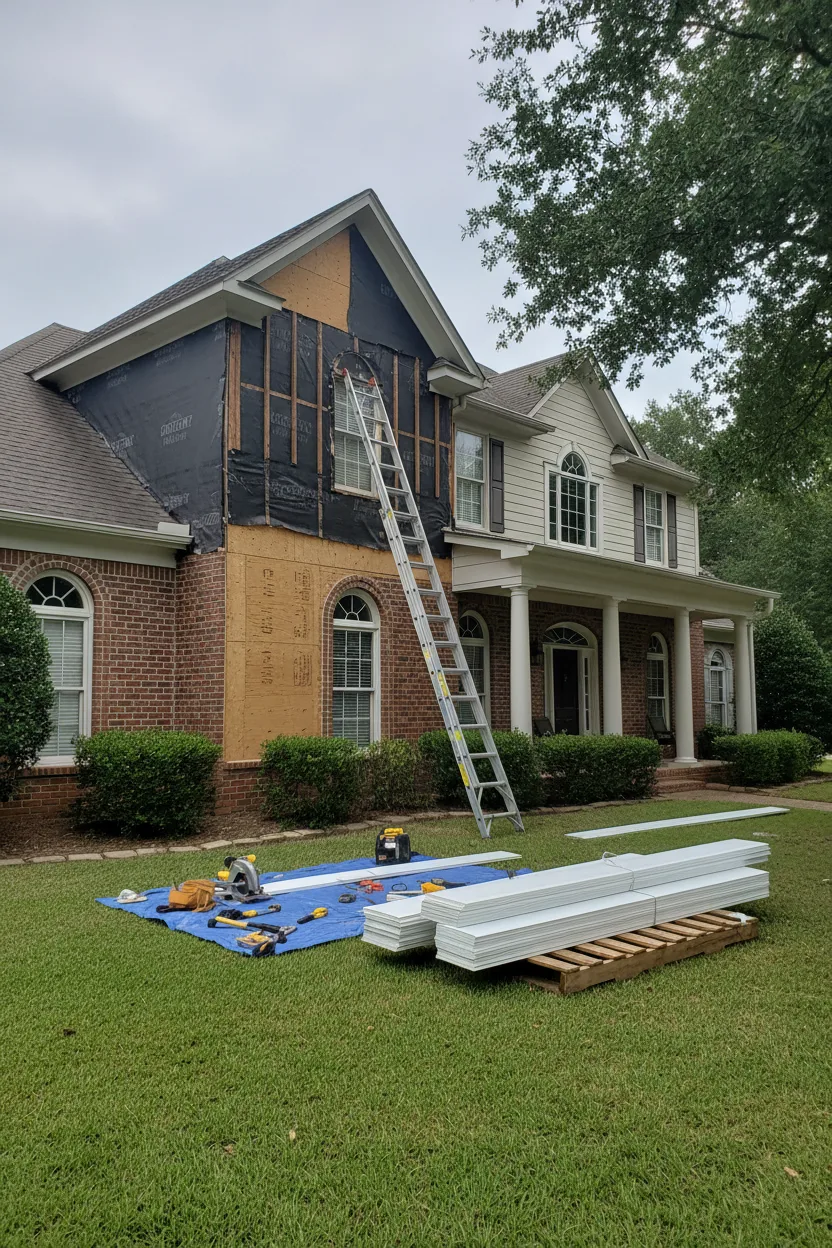
Fiber cement, often sold under the Hardie name, is a popular upgrade from vinyl or wood because it handles moisture, pests, and heat well. It is also heavy and brittle, and it has to be installed correctly to perform. Fiber cement siding installation in Gastonia comes down to a few details that decide how well it holds up.
What a proper fiber cement installation includes
- Flashing and a moisture barrier — behind the siding and around windows, doors, and every cut edge, so water has a way out
- Correct gaps — expansion gaps and clearances above roofs and the ground, as the manufacturer specifies
- Clean cuts — fiber cement makes fine dust, so boards are cut outside with dust controls rather than on the wall
- Fastening into studs — boards are heavy, and fasteners that only catch the sheathing pull loose over time
Repairs are different from vinyl too. Impact cracks and failed caulk or paint at the joints are the usual problems, and they can often be fixed without replacing the board. An on-site look decides which.
Wood Siding Repair in Gastonia, NC
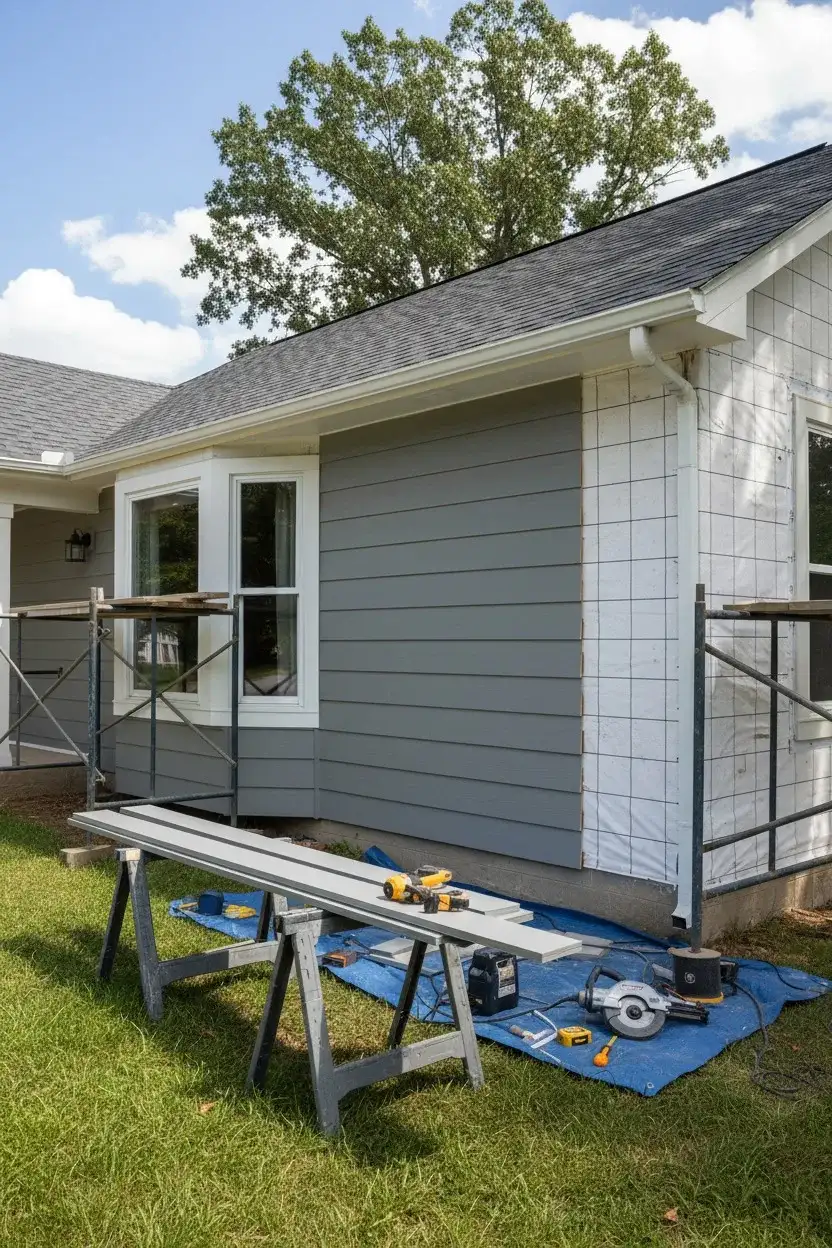
Plenty of older homes in Gaston County still have wood siding, and it fails differently than vinyl. Water gets in at the bottom edges, around windows, and wherever the paint has worn through, so soft spots, peeling paint, and rot tend to show up first. Wood siding repair in Gastonia usually means replacing the damaged boards, not the whole wall.
What wood siding repair involves
- Checking how far it goes — probing the boards around the visible spot to find where the wood is still solid
- Replacing damaged boards — cutting out the rotted sections and fitting new boards, not just filling or painting over them
- Sealing and painting — priming bare ends and edges and repainting so moisture can’t get back in
- Fixing the cause — failed caulk, missing flashing, or a gutter spilling onto the wall, so the new boards don’t rot too
- Checking for pests — carpenter bees and termites often start in wood that is already soft
When rot has spread across a whole wall, wood siding installation on that section is usually a better call than patching board by board. An on-site look at the wall behind the siding decides which.
Storm & Wind Damage Siding Repair
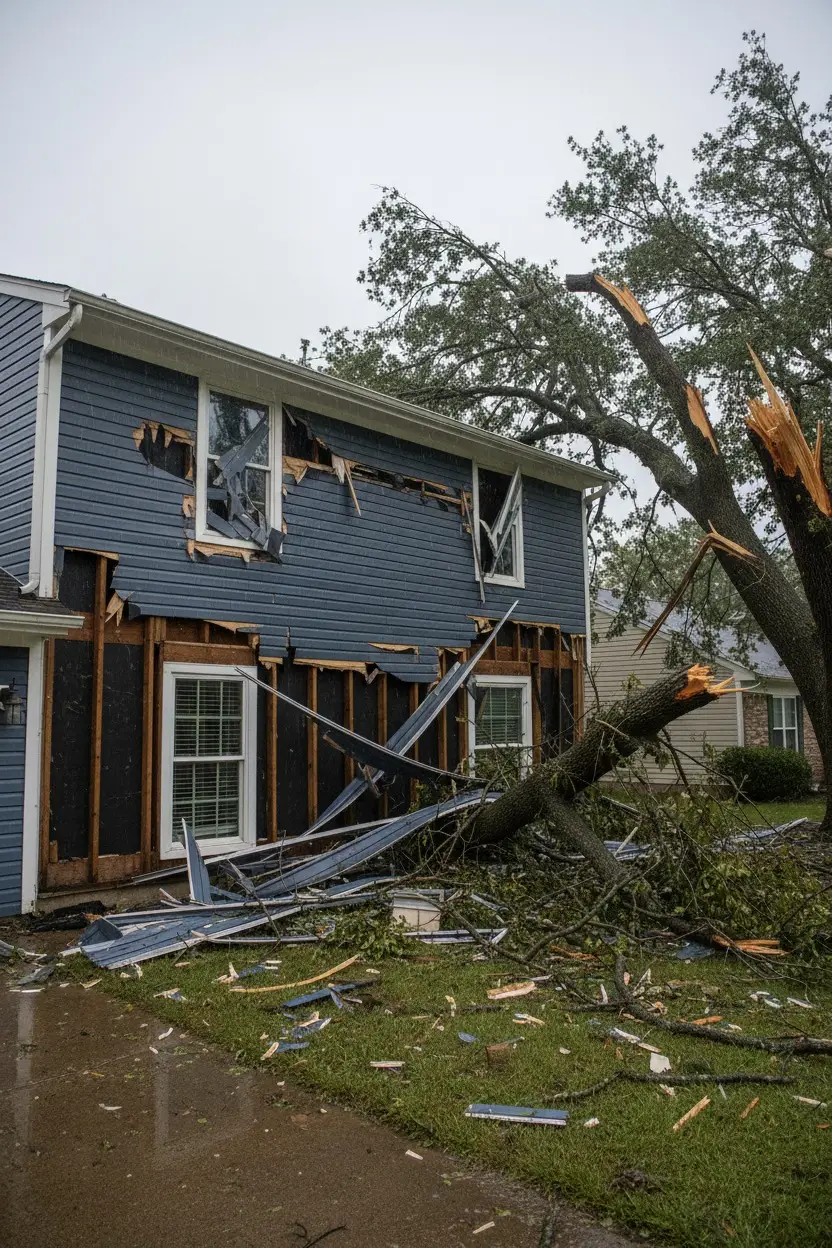
Severe weather is one of the most common reasons siding gets damaged in this area — wind-lifted panels, impact damage from debris, and water intrusion through panels torn loose during a storm. Storm damage has a specific risk profile that’s worth understanding.
Why storm damage is worth checking early
Once a panel is lifted or torn loose, the wall behind it is exposed directly to the elements — not just to the next storm, but to routine rain and humidity in the meantime. What starts as a single damaged panel can become a much larger repair if the exposed section is left uncovered.
Gaston County has had its share of severe weather. On May 8, 2024, two EF-1 tornadoes crossed the county, and the second tracked about eight miles from the north side of Gastonia east toward Belmont, with winds near 110 mph, according to the National Weather Service. That is why loose, cracked or missing siding is worth a look after high winds, even when it seems like a small problem.
If you’ve had recent storm damage
- Avoid covering the area permanently until it’s been assessed — temporary protection is fine, but don’t assume it’s a complete fix
- Photograph the damage before any temporary covering goes up, in case you need documentation for an insurance claim
- Get both the visible damage and the area around it checked — wind damage often extends further than what’s immediately obvious
Siding Contractors in the Gastonia Area
Most people searching for a siding contractor in Gastonia aren’t after a brochure. They have a specific problem: a cracked panel, a section that came loose in the wind, or a wall that looks fine but feels soft. When you call, you describe what you’re seeing and get connected with a local siding contractor in the Gastonia area who can look at it. The same call covers repair, replacement and installation, so you don’t have to decide in advance which one you need.
Towns We Connect Calls From
Calls come in from Gastonia and across Gaston County, including Belmont, Mount Holly, Cramerton, Lowell, McAdenville, Stanley and Dallas. Not sure your address is covered? Call and give your town, or see the full list of Gaston County towns.
How a Call Actually Works
A lot of homeowners put off calling because they’re not sure what happens next. Here’s the actual sequence, no pressure and no assumption that bigger is always better.

Step One: Describe What You’re Seeing
Visible cracks, loose panels, recent storm activity, or something noticed inside the home like a stain or a draft — you describe it.

Step Two: A Local Contractor Talks It Through
A phone description only tells part of the story, so the contractor may want to see the siding and, where relevant, the wall behind it before recommending anything.

Step Three: The Contractor Explains the Finding — You Decide
You’ll know whether you’re looking at a repair or a replacement, and why, before any work is discussed — then repair or replacement, based on what your home actually needs, on your timeline.
Frequently Asked Questions
How do I know if I need siding repair or full replacement?
It comes down to how contained the damage is and whether the wall behind the siding has been affected. Isolated cracks, loose panels, or minor impact damage are typically a repair. Widespread warping, repeated damage in the same areas, or signs that moisture has reached the wall usually point to replacement. A contractor looking at the wall behind the siding is the most reliable way to tell.
What causes siding to fail in Gastonia?
Moisture is the most common cause. Water gets in through failed flashing, gaps in caulk or seams, and cracked or loose panels, then works its way into the wall behind. Impact from storm debris, heat from grills or reflected sunlight, and plain age also wear siding down.
Can I find siding repair near me in Gastonia?
Yes. If you are in Gastonia or anywhere in Gaston County, call the number on this page, describe what you are seeing, and you can be connected with a local siding contractor. Repair is often possible, provided the wall behind the affected panels has not been compromised by moisture.
Can storm-damaged siding wait?
Once a panel is loose or torn off, the wall behind it is exposed to rain and humidity. Temporary protection helps, but the area should be checked before the next stretch of bad weather. Photograph the damage first in case you need it for an insurance claim.
Can siding be repaired instead of replaced if it is just a few panels?
In most cases, yes, provided the wall behind the affected panels has not been compromised by moisture. Repair often makes sense when damage is limited to a specific area.
What happens when I call?
You describe what you are seeing and are connected with a local siding contractor. Depending on the job, the contractor may want to see the siding and the wall behind it before recommending repair or replacement. What you do next is your decision.
Does the contractor handle both repair and full replacement?
Repair, partial re-siding and full replacement are all things a siding contractor can advise on. Ask about your situation when you call, and the recommendation should come from what the wall actually needs.
Can wood siding be repaired, or does it have to be replaced?
It depends on how far the damage goes. Small, localized spots can often be repaired. Soft or spongy boards, or damage that has spread behind the surface, point to a bigger moisture problem. Call and describe what you are seeing, and a local contractor can talk it through.
Talk to Someone About Your Siding Today
Whether it’s a contained repair, storm damage, or siding that’s reached the end of its useful life, get a straightforward assessment before deciding what to do next. No obligation to move forward after the call.